Is TikTok’s New AI Feature Going to Kill Your Ads?
About two years ago, I started noticing something on TikTok that made me both excited and a little queasy. The AI-generated content was getting really, really good. I’m talking hyper-realistic historical recreations, celebrity deepfakes so convincing you had to do a double take, and fully synthetic storytelling that looked more polished than half the human-created content on the platform.
At Social Impressions, we’ve been creating some impressive AI content for our clients, and I can tell you firsthand it’s driving real sales. Every single day. But here’s the thing nobody wants to say out loud: for every piece of quality AI content that lands, there’s an absolute avalanche of slop. And some brands? They’re perfectly happy to accept subpar work because it’s fast, cheap, and it checks a box that says “posted today.”
Well, TikTok just threw a wrench into that strategy, and I think it’s exactly the direction social media needs to go.
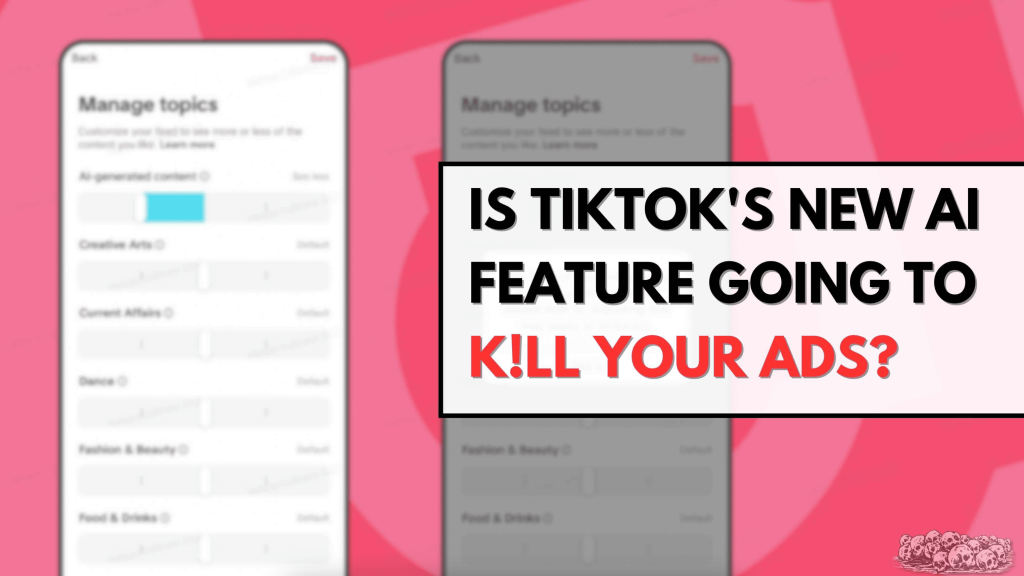
TikTok announced it’s rolling out AI-generated content controls that let users adjust how much AIGC (AI-generated content) they see in their feeds. It’s a slider, tucked inside the “Manage Topics” tool, where you already tell TikTok whether you want more dance videos or fewer sports clips. Now “AI-generated content” gets its own dial.
Want less AI? Slide it down. Can’t get enough of those synthetic storytelling videos? Crank it up.
The feature will roll out over the coming weeks, and you’ll find it at Settings → Content Preferences → Manage Topics → AI-Generated Content.
Simple enough. But the implications? Those run deep.
Why This Matters for Your TikTok Marketing Strategy
If you’re a brand leaning heavily on AI-generated content to fill your content calendar (and let’s be real, a lot of you are), this change should make you sit up straight. Because if users start dialing back AI content, your reach could tank faster than you can say “algorithm update.”
TikTok says the feature is meant to shape the diversity of the feed, not remove content entirely. But we all know how these things go. Algorithms have a funny way of “suggesting” what they want you to see, regardless of your stated preferences. I hope TikTok proves me wrong on this, but I’ve been doing social media marketing long enough to maintain a healthy dose of skepticism.
Here’s what I know for sure: this change will affect ad strategies. The brands that win are going to be the ones who’ve been balancing AI efficiency with authentic, human-created content all along. The ones who treated AI as a tool to enhance their work, not replace the human part entirely.
TikTok isn’t stopping at user controls. They’re also testing a technology called “invisible watermarking” for AI-generated content. The platform already requires creators to label realistic AI content and uses C2PA Content Credentials (a cross-industry metadata standard that signals when something was AI-made). But here’s the problem: metadata can be stripped if videos are edited or reuploaded elsewhere.
So TikTok is building a safeguard. An invisible watermark that only TikTok can read, automatically applied to AI-generated content created with their tools or uploaded with C2PA metadata. Even if visible labels or metadata are removed, TikTok can still identify the content as AI-generated and slap the correct disclosures on it.
It’s part feed customization, part trust infrastructure, and part acknowledgment that AI isn’t going anywhere, but users should get a say in how much of it shows up when they’re just trying to waste time on their lunch break.
What This Means for You (The Practical Stuff)
Look, AI is helping us evolve at warp speed. I’ve seen it firsthand. We’re creating content faster, testing more variations, and getting results that would have taken three times as long just two years ago. But here’s the lesson that keeps showing up in my work, over and over again:
Never rely on any single form of marketing for all your conversions.
Platforms change. Algorithms shift. Features get added and removed. What worked last quarter might be dead in the water by next month. TikTok’s move is just the latest reminder that the ground beneath us is always moving.
So what do you do?
Diversify. Don’t put all your eggs in the AI content basket. Mix it with human-created videos, user-generated content, behind-the-scenes footage, and yes, even the occasional perfectly imperfect post that didn’t go through five rounds of editing.
Test. Run your AI content alongside your human content and actually track the performance. Don’t just assume one is better because it was easier to make.
Adapt. When platforms make changes like this, pay attention. Adjust your strategy before your metrics force you to.
Here’s what I tell every client who comes to me excited about AI solving all their content problems: AI can help you get there faster. But it can’t replace the human part.
At the end of the day, marketing is still about connecting with real humans who want to feel something when they engage with your brand. They want to laugh, or learn, or feel understood. They want to see themselves in your story.
AI can be a powerful tool for that. It can help you scale your creativity, test more ideas, and produce content that looks professional without hiring a full production team. But the strategy behind it? The understanding of what makes people stop scrolling? The ability to craft a message that resonates?
That’s still on you.
As AI-generated content becomes harder to distinguish from reality, and as competing platforms like Meta (with their Vibes feed) and OpenAI (with their Sora social platform) push even harder into AI-only experiences, TikTok is taking a different approach. They’re not saying no to AI. They’re saying users should have a choice.
I think that’s smart. Because the backlash is coming. It’s already started, quietly, in comment sections and group chats and those little moments when someone watches a video and thinks, “Wait, is this even real?”
The brands that survive the next phase of social media marketing won’t be the ones who went all-in on AI or the ones who refused to touch it. They’ll be the ones who figured out how to use it thoughtfully, as part of a bigger strategy that still remembers why we’re all here in the first place.
To connect. To feel. To be moved by something real, even if the tool that helped create it wasn’t.
Feel overwhelmed? We’re here to help. Reach out today, and let’s partner to take your efforts to the next level.